

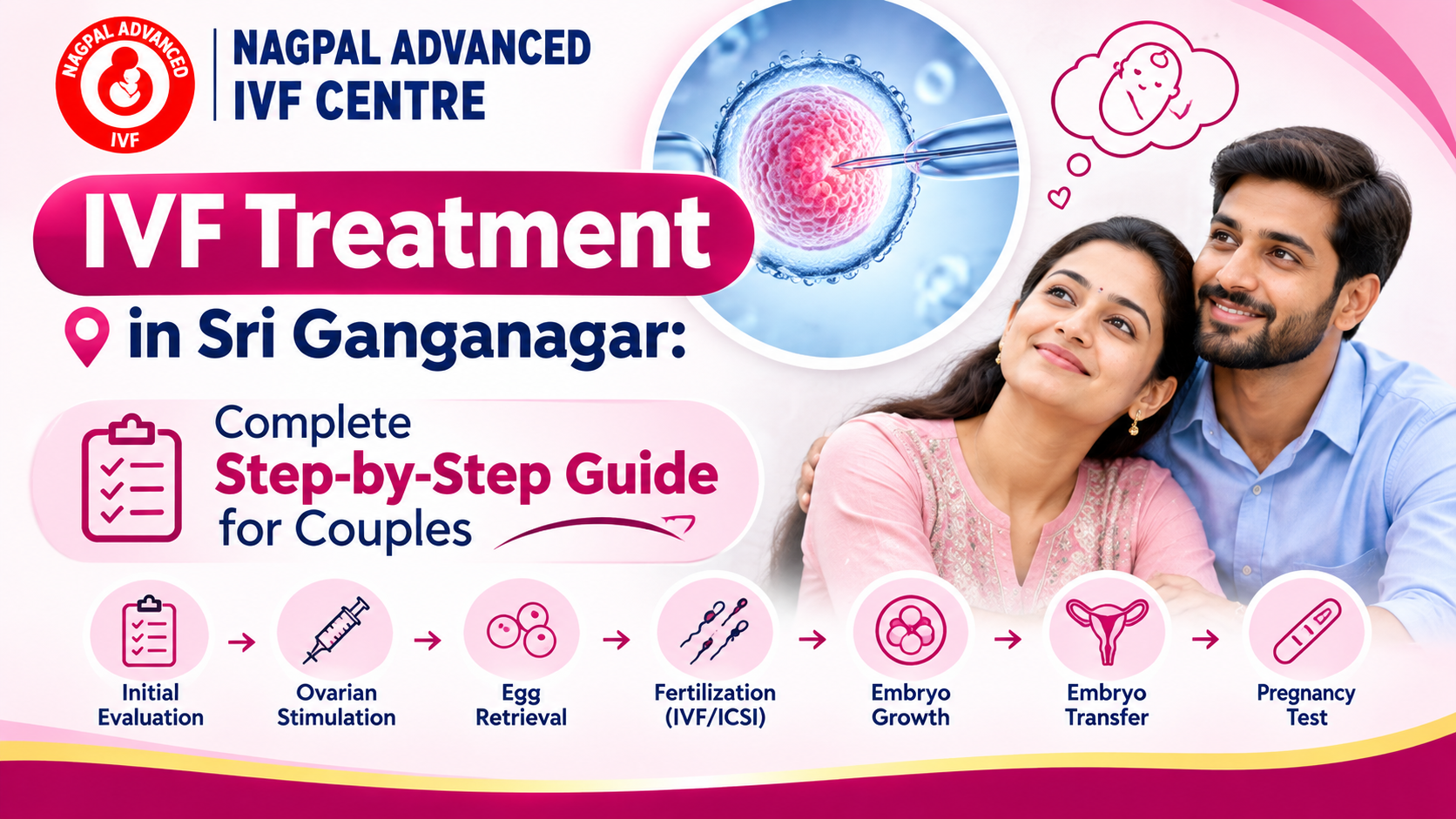
Trying to conceive but not getting the good news? Every month brings new hope, expectations and sometimes disappointment. If you and your partner have been trying to become parents without success, you are not alone.
Infertility can be an emotionally challenging journey, but understanding the available medical options is an important first step.
One such option is In Vitro Fertilization (IVF), an advanced fertility treatment that helps eligible couples and individuals pursue pregnancy with medical assistance.
If you are searching for IVF treatment in Sri Ganganagar, Rajasthan, this guide will help you understand everything about IVF, including its procedure, required tests, treatment stages, possible risks, cost factors and what to expect during your fertility journey.
At Nagpal Kidney & Super Speciality Hospital, Dr. Shalini Nagpal, MBBS, MS (Obstetrics & Gynaecology), IVF & Fertility Specialist, provides consultation for couples exploring fertility treatment options.
Let’s understand the complete IVF process, step by step.
What Is IVF Treatment?
IVF stands for In Vitro Fertilization. It is an assisted reproductive technology (ART) in which an egg and sperm are brought together outside the human body in a laboratory to facilitate fertilization.
The resulting embryo may then be transferred into the woman’s uterus, where it may implant and develop into a pregnancy.
In simple words, IVF involves:
- Collecting eggs from the woman’s ovaries.
- Collecting and preparing sperm.
- Fertilizing the eggs with sperm in a laboratory.
- Monitoring the development of embryos.
- Transferring a suitable embryo into the uterus.
IVF may be considered for different fertility-related conditions, depending on the medical evaluation of both partners.
When Should Couples Consider IVF Treatment?
Not every couple experiencing difficulty conceiving needs IVF immediately. The appropriate treatment depends on the underlying cause of infertility, age, reproductive health and previous treatment history.
A fertility specialist may discuss IVF in situations such as:
- Blocked or Damaged Fallopian Tubes
Fallopian tubes play an important role in natural conception by allowing the egg and sperm to meet.
If the tubes are blocked or significantly damaged, natural fertilization may become difficult. IVF can help bypass the fallopian tubes.
- Male Factor Infertility
Low sperm count, poor sperm motility or certain sperm-related problems can affect fertilization.
Depending on the diagnosis, IVF or IVF with ICSI may be considered.
- PCOS and Ovulation Problems
Polycystic Ovary Syndrome (PCOS) can affect regular ovulation and make conception difficult for some women.
Treatment may begin with lifestyle changes or medication. IVF may be considered if other suitable treatments have not worked or are not appropriate.
- Endometriosis
Endometriosis can sometimes affect the ovaries, fallopian tubes and reproductive organs, potentially impacting fertility.
Depending on its severity and other fertility factors, IVF may be one of the treatment options.
- Unexplained Infertility
Sometimes, even after medical investigations, the exact reason for difficulty conceiving cannot be identified.
This is known as unexplained infertility. A fertility specialist may discuss different treatment approaches, including IVF, depending on the couple’s circumstances.
- Previous Fertility Treatment Was Unsuccessful
Couples who have undergone unsuccessful fertility treatments, including IUI, may benefit from a detailed reassessment to understand their next options.
Important: IVF is not automatically the first treatment for every infertility condition. A personalised medical evaluation helps determine whether IVF, IUI, medication or another approach is appropriate.
IVF Treatment Process: Step-by-Step Guide
One of the most common questions couples ask is:
“IVF treatment mein exactly hota kya hai? Aur kitne steps hote hain?”
Let’s understand the complete IVF journey in simple language.
Step 1: Initial Consultation and Fertility Evaluation
The first step is meeting an IVF and fertility specialist.
During the initial consultation, the doctor discusses your medical history, previous pregnancies, menstrual cycle, previous fertility treatments and any existing health conditions.
Both partners may need investigations to understand their reproductive health.
Common investigations may include:
For Women:
- AMH (Anti-Müllerian Hormone) test.
- FSH and other relevant hormone tests.
- Pelvic ultrasound.
- Antral Follicle Count (AFC).
- Thyroid and other relevant investigations.
- Assessment of the uterus and reproductive organs.
For Men:
- Semen analysis.
- Sperm count and motility assessment.
- Additional hormonal or other investigations, if required.
These tests help the specialist understand possible fertility challenges and plan an appropriate treatment approach.
Step 2: Ovarian Stimulation
Normally, a woman’s ovaries generally release one mature egg during a menstrual cycle.
During IVF, fertility medications are used to stimulate the ovaries to develop multiple follicles, which may contain eggs.
The doctor monitors the response through:
- Ultrasound examinations.
- Hormonal blood tests, when required.
- Follicular growth monitoring.
The medication and dosage depend on the woman’s age, ovarian reserve and individual response.
Why is this step important?
Developing multiple follicles may provide more opportunities to retrieve eggs for fertilization. However, the number and maturity of eggs cannot be guaranteed.
Step 3: Trigger Injection and Egg Retrieval
Once the follicles have developed appropriately, the doctor plans a final maturation injection, commonly called the trigger injection.
Egg retrieval is generally scheduled at a specific interval after this injection.
During the procedure, eggs are collected from the ovaries using a needle guided by ultrasound, usually under sedation or anaesthesia.
The collected eggs are then assessed by the embryology team.
The number of eggs retrieved and the number of mature eggs may differ.
Step 4: Sperm Collection and Fertilization
On the day of egg retrieval, a sperm sample is generally collected and prepared.
The embryology team then uses an appropriate fertilization method.
There are two commonly discussed approaches:
Conventional IVF: Eggs and prepared sperm are placed together in a laboratory dish to allow fertilization.
ICSI (Intracytoplasmic Sperm Injection): A single sperm is injected directly into an egg using specialised laboratory equipment.
ICSI may be recommended in selected situations, particularly certain cases of male factor infertility or previous fertilization difficulties.
The choice between conventional IVF and ICSI depends on medical and laboratory considerations.
Step 5: Embryo Development and Monitoring
After fertilization, the resulting embryos are monitored in the laboratory.
Embryologists observe their development and assess their characteristics.
Embryos may be cultured for different durations, commonly up to Day 3 or Day 5, depending on the treatment plan and clinical circumstances.
Not every fertilized egg develops into an embryo suitable for transfer.
The embryology team evaluates embryo development to help the fertility specialist plan the next step.
Step 6: Embryo Transfer
Embryo transfer is an important stage of IVF treatment.
A selected embryo is placed into the woman’s uterus using a thin, specialised catheter.
The procedure is generally performed under ultrasound guidance and usually does not require general anaesthesia.
The doctor decides the timing and number of embryos to transfer based on the patient’s individual circumstances and applicable medical guidelines.
In some cases, a fresh embryo transfer may be planned. In other cases, embryos may be frozen and transferred during a later cycle.
Step 7: Pregnancy Test and Follow-Up
After embryo transfer, the patient is advised to follow the prescribed medication schedule and instructions.
A blood test called Beta-hCG is generally performed at the time recommended by the fertility specialist to check for pregnancy.
If the test is positive, further monitoring and ultrasound examinations are planned to assess the developing pregnancy.
If the result is negative, the doctor discusses the findings and possible next steps with the couple.
Remember: Embryo transfer does not guarantee pregnancy. Every patient’s response and outcome can be different.
How Long Does IVF Treatment Take?
This is another common concern among couples considering IVF.
An IVF cycle does not take exactly the same amount of time for everyone.
A typical treatment cycle may involve:
| IVF Stage | General Timeline |
| Initial evaluation | Depends on investigations |
| Ovarian stimulation | Around 8–14 days |
| Egg retrieval | After trigger injection |
| Embryo development | Usually 3–5 days |
| Embryo transfer | Fresh or in a later cycle |
| Pregnancy blood test | Usually around 9–14 days after transfer, as advised |
The actual timeline depends on the treatment protocol, ovarian response, embryo development and whether a fresh or frozen embryo transfer is planned.
Some couples may require additional investigations or more than one treatment cycle.
What Is the Difference Between IVF and ICSI?
Many couples get confused between IVF and ICSI.
Both are assisted reproductive techniques, but the fertilization method is different.
| IVF | ICSI |
| Egg and prepared sperm are placed together. | A single sperm is injected directly into the egg. |
| Fertilization occurs without direct sperm injection. | Fertilization involves specialised microscopic injection. |
| May be suitable when sperm parameters are adequate. | May be considered in selected male infertility cases or previous fertilization problems. |
The fertility specialist and embryology team decide which approach is appropriate after reviewing the medical findings.
What Factors Affect IVF Treatment Success?
One of the biggest questions couples ask is:
“IVF successful hone ke chances kitne hote hain?”
There is no single success rate that applies to every patient.
IVF outcomes depend on several medical factors, including:
- Woman’s Age: Age is an important factor because egg quantity and quality generally decline over time.
- Ovarian Reserve: AMH levels and antral follicle count help assess ovarian reserve, although they cannot independently predict whether pregnancy will occur.
- Egg Quality: Egg maturity and quality can influence fertilization and embryo development.
- Sperm Health: Sperm count, motility and other characteristics may influence fertilization.
- Uterine Health: The condition of the uterus and endometrial lining is considered when planning embryo transfer.
- Embryo Development: Embryo development and other relevant characteristics may influence the likelihood of implantation.
- Underlying Medical Conditions: Conditions such as PCOS, endometriosis and certain hormonal disorders may affect the treatment plan.
A fertility specialist can explain how these factors apply to your individual situation.
Is IVF Treatment Safe? Understanding Possible Risks
IVF is an established fertility treatment, but like other medical procedures, it involves potential risks and side effects.
Some possible risks include:
- Temporary bloating or discomfort during ovarian stimulation.
- Ovarian Hyperstimulation Syndrome (OHSS).
- Bleeding or infection following egg retrieval, although these are uncommon.
- Ectopic pregnancy.
- Multiple pregnancy, particularly when more than one embryo is transferred.
- Emotional stress associated with fertility treatment.
The possibility of complications varies from patient to patient.
Your fertility specialist should explain the benefits, limitations, costs and potential risks before treatment.
IVF Treatment Cost in Sri Ganganagar: What Should Couples Know?
The cost of IVF treatment is one of the most important considerations for couples.
However, IVF does not have one fixed price for every patient.
The total expense may depend on:
- Initial fertility investigations.
- Type of stimulation medication required.
- Number of monitoring visits.
- Egg retrieval procedure.
- Laboratory fertilization method.
- Whether ICSI is recommended.
- Embryo freezing and storage, if applicable.
- Fresh or frozen embryo transfer.
- Additional investigations or procedures.
Before beginning treatment, ask for a detailed cost estimate that explains what is included and which expenses may be additional.
At Nagpal Kidney & Super Speciality Hospital, Sri Ganganagar, couples can contact the IVF helpline to enquire about consultation and available fertility services.
How Should Couples Prepare for IVF Treatment?
Preparing for IVF is not just about attending appointments. Both partners should understand the treatment plan and participate in the process.
Here are some practical suggestions:
Maintain a Balanced Diet: Include nutritious foods and follow your doctor’s dietary recommendations.
Avoid Smoking and Alcohol: These can negatively affect reproductive health. Discuss lifestyle changes with your doctor.
Manage Existing Health Conditions: Conditions such as diabetes and thyroid disorders should be discussed and managed appropriately.
Take Medicines Only as Prescribed: Never change fertility medication doses without consulting your doctor.
Attend Monitoring Appointments: Regular monitoring helps the doctor assess treatment response and make necessary adjustments.
Support Each Other Emotionally: IVF can be stressful. Open communication and emotional support can make the journey easier.
Why Consult an IVF & Fertility Specialist in Sri Ganganagar?
Choosing a fertility specialist is an important decision.
Couples should look for a specialist who takes time to understand their medical history, explains treatment options clearly and provides realistic guidance about possible outcomes.
At Nagpal Kidney & Super Speciality Hospital, Sri Ganganagar, Dr. Shalini Nagpal is an IVF & Fertility Specialist with qualifications in Obstetrics & Gynaecology.
The hospital’s listed fertility-related services include:
- IUI, IVF and ICSI.
- PCOD Clinic.
- Infertility Treatment.
- Laparoscopy.
- Hysteroscopy.
- Urogynaecology and Incontinence Services.
Every fertility journey is different. The appropriate treatment should be decided after evaluating both partners and understanding the underlying cause of infertility.
Frequently Asked Questions About IVF Treatment
- Who is eligible for IVF treatment?
IVF may be considered for individuals and couples experiencing different fertility challenges, including blocked fallopian tubes, certain male infertility factors, endometriosis and unexplained infertility. Eligibility and treatment options depend on medical evaluation and applicable regulations.
- Is IVF painful?
Most stages of IVF are manageable for many patients. Fertility injections may cause temporary discomfort, while egg retrieval is generally performed under sedation or anaesthesia. Some women may experience mild cramping or bloating afterward.
- Can IVF work on the first attempt?
Yes, pregnancy can occur during the first IVF cycle, but success is not guaranteed. Outcomes depend on several factors, including age, ovarian reserve, egg and sperm health, embryo development and other medical considerations.
- Is IVF possible after the age of 35?
IVF may be an option after 35. However, age can influence egg quality and treatment outcomes. Early consultation with a fertility specialist can help couples understand their available options.
- What is the difference between fresh and frozen embryo transfer?
In a fresh embryo transfer, an embryo is transferred during the same treatment cycle as egg retrieval. In a frozen embryo transfer, a previously frozen embryo is transferred during a later prepared cycle.
The appropriate approach depends on individual medical circumstances.
- Can PCOD patients undergo IVF?
Yes, women with PCOD may be considered for IVF when clinically appropriate. However, many women with PCOD may conceive through other treatments. The right approach depends on their fertility evaluation and individual needs.
- Is IVF the only solution for infertility?
No. Depending on the cause, treatment may include lifestyle changes, medication, ovulation induction, IUI, surgery or IVF. A fertility specialist can help identify the most suitable option.
- How many IVF cycles are required?
There is no fixed number of IVF cycles required for everyone. Some patients may achieve pregnancy in one cycle, while others may need additional cycles. The decision should be based on medical evaluation and previous treatment outcomes.
- Does IVF guarantee pregnancy?
No. IVF improves the available treatment options for certain fertility conditions, but it cannot guarantee pregnancy or a live birth. Every patient’s circumstances are different.
- When should we consult an IVF specialist?
Couples are generally advised to seek fertility evaluation after 12 months of trying to conceive if the woman is under 35, or after 6 months if she is 35 or older. Women over 40 or those with known fertility problems, irregular periods or previous reproductive conditions should consider earlier consultation.
Take the First Step Towards Understanding Your Fertility
The journey towards parenthood can sometimes be challenging, but you do not have to navigate it without medical guidance.
Understanding the cause of infertility, exploring available treatments and receiving personalised medical advice can help you make informed decisions.
If you are exploring IVF treatment in Sri Ganganagar, consult an IVF & Fertility Specialist to understand your options.
Consult Dr. Shalini Nagpal
MBBS, MS (Obstetrics & Gynaecology)
IVF & Fertility Specialist
Nagpal Kidney & Super Speciality Hospital
Sri Ganganagar, Rajasthan
IVF Helpline: 85299-13200
Hospital Contact: 0154-2460882
Book a consultation to discuss your fertility concerns and understand the treatment options suitable for you.
Medical Disclaimer: This article is intended for general educational purposes only and should not be considered a substitute for professional medical advice, diagnosis or treatment. IVF suitability, procedures, risks and outcomes vary between individuals. Please consult a qualified fertility specialist for personalised guidance.